
If your patio or pergola only performs well for a few hours a day, the culprit is usually because of either some sunlight cutting across the space at the wrong angle, or wind and rain reaching areas the roofline doesn’t cover. Awnings solve the first problem by controlling shade from above, while outdoor blinds solve the second by closing off the sides. Many homes end up needing a mix of both, but working out which one addresses your specific issue is the first step. Here we’ll break down how each product works, when one makes more sense than the other, and how to think about combining them if your patio has more than one weak spot.
Always Start With How You Will Actually Use the Space
Before comparing fabrics, colours or operating systems, it helps to look at what your patio or pergola is actually used for on a normal week. A space that mainly hosts a quiet coffee in the morning has different demands to one used for regular family meals, entertaining or weekend barbecues. If you’re hoping to use the area for most of the year rather than just a few comfortable months, that changes the calculation too.
If the main issue is direct sunlight crossing the roofline and landing on your furniture, an awning is likely to solve it. If the patio already has a roof but sun, wind and rain are getting in from the sides, outdoor blinds are the more practical fix. Watching how the area behaves across a full day, rather than assuming from a single visit, will tell you far more than guesswork.
When Outdoor Blinds Make More Sense
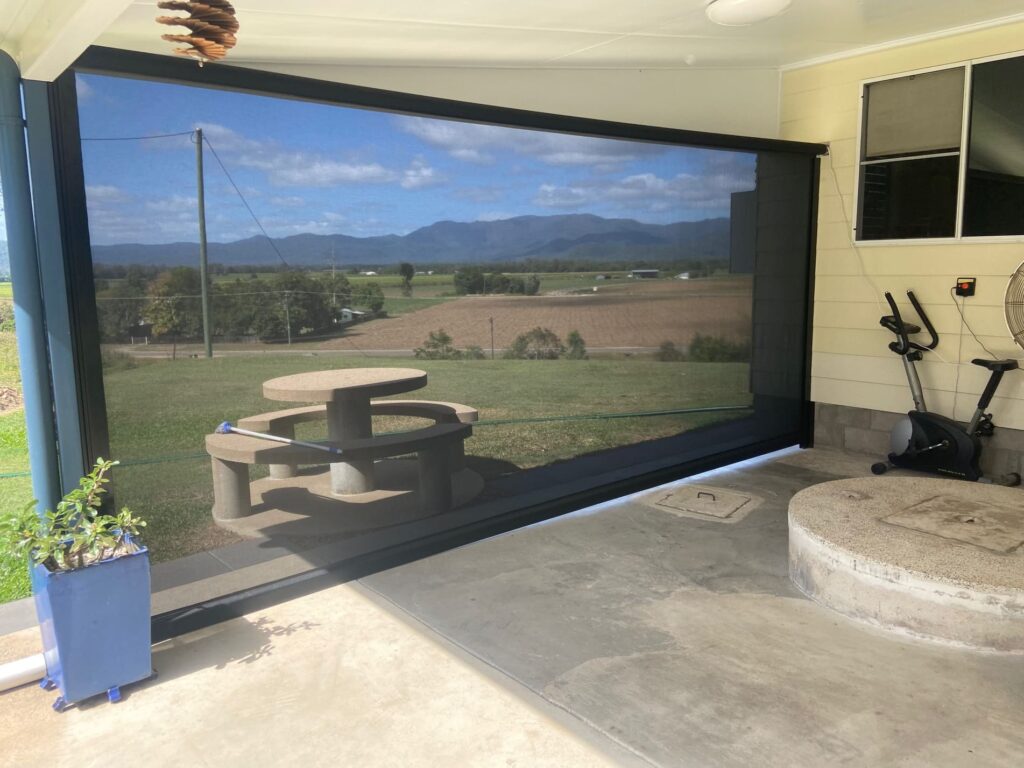
Outdoor blinds work well when the roof of a patio or pergola already provides overhead protection but the sides remain open. Rather than permanently enclosing the space, blinds can be lowered when conditions call for it and raised again when you want the area to feel open.
This makes them a strong fit for entertaining areas, where weather can shift with little warning. Lowering a blind cuts glare, reduces wind exposure and helps keep rain from blowing in through an open side. Depending on the fabric, blinds can also add a level of privacy without turning the patio into an enclosed room.
Fabric choice changes what the blind actually does, with mesh-style fabrics reducing sun and glare whilst still letting air move through, which suits areas where ventilation matters as much as shade. Clear PVC takes a different approach, forming more of a barrier against wind and rain while keeping the outlook through the blind intact.
Where Awnings Have the Advantage
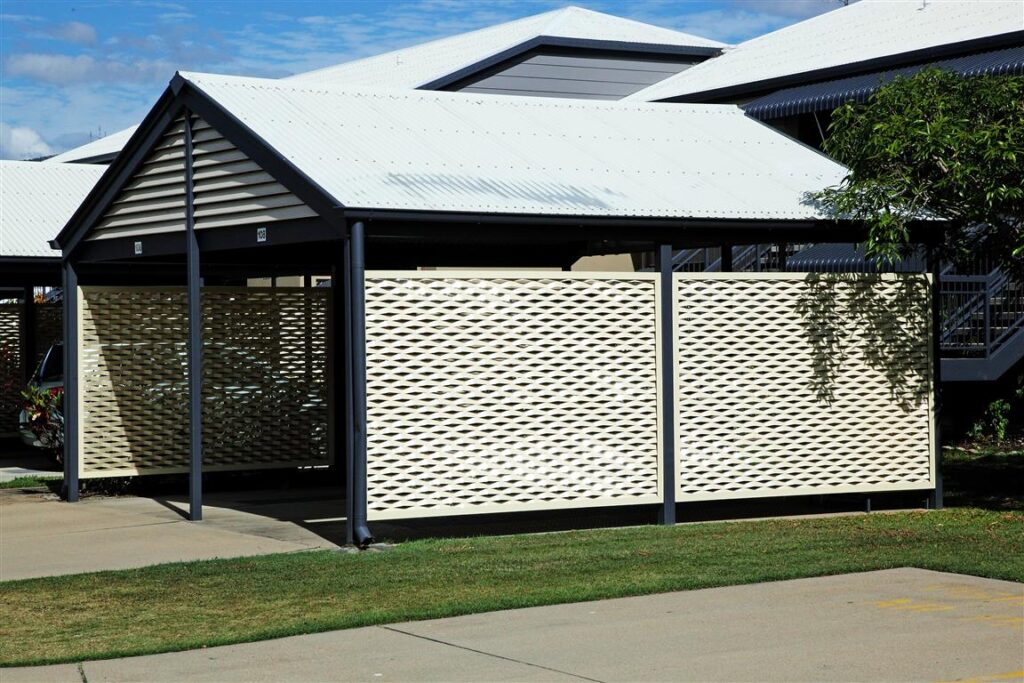
Awnings are built around controlling sunlight from above and can be fitted over patios, windows, doors and other outdoor areas to create shade without closing in the sides, which is useful if an open, spacious feel is part of what you want from the area.
Retractable awnings add flexibility because the amount of shade can be adjusted as conditions change. On a bright afternoon, the awning extends to cover the seating area; once the sun moves or the weather cools, it retracts to let more light back in.
They’re also useful where there’s no substantial roof over the space to begin with. An awning can create a shaded zone without the cost or scale of a full permanent structure.
Could Your Patio Benefit From Both?
Choosing between outdoor blinds and an awning isn’t always necessary, since the two products are often used together on the same structure. A pergola with an open roof section might use an awning above and blinds around the sides. A patio that gets strong overhead sun in summer and wind-driven rain in the wet season may need both forms of coverage, applied to different parts of the same area.
Combining products takes more planning than installing either one on its own. Fixing points, dimensions, clearances and operating mechanisms all need to work together, especially where several systems are going in around the same structure. The finished result should read as one cohesive setup rather than a set of separate additions bolted on over time.
Motorisation is also worth considering once multiple blinds or an awning are involved. Larger installations, frequently used areas and hard-to-reach openings are considerably easier to manage with motorised operation, while smaller, easily accessible sections often work fine with manual systems.
The right setup is the one that matches how the space is actually used, whether that ends up being a single awning, several outdoor blinds, or a combination of both.