
Strong sunlight can turn the best rooms in a home into the ones people avoid by mid-afternoon, and in Townsville that pretty much applies for much of the year. Exterior plantation shutters deal with this from outside the window, shading the glass before heat reaches it, while adjustable louvres let you decide how much light, airflow and privacy each room gets as conditions change. That combination suits many homes, and particularly those with large windows, glass doors or west-facing living areas. How well they suit yours depends on where the windows sit and how each room is used, so the sections below cover what they do in practice and what to weigh up before you decide.
What difference can exterior shutters make during summer?
Summer heat is one of the biggest challenges when keeping a home comfortable. Large windows allow a lot of sunlight into a room, and once that heat passes through the glass, cooling the interior becomes much harder. Interior coverings work after the sun has already entered, whereas exterior plantation shutters provide shade before it reaches the window.
The louvres give you control through the day. A simple approach is to adjust them by orientation:
- East-facing windows: angle the louvres to soften the morning sun, then open them up once it moves around.
- West-facing windows: close or nearly close them from midday, when the low afternoon sun is most intense.
- North-facing windows: tilt the louvres so the outer edge sits higher, which blocks the high summer sun while still allowing a view outward.
The same adjustment reduces glare on televisions and screens, which makes bright rooms easier to use. During periods of intense heat, keeping the shutters closed on sun-facing windows can also reduce the work required from your air conditioning.
Can they make your home more private without making it dark?
Privacy and natural light tend to pull against each other. So closing curtains or blinds fully stops people seeing in, but it can leave the room dark and closed off. Because plantation shutter louvres can be set at any angle, you have more options than simply open or closed.
You can position the louvres to restrict direct views from the street or from neighbouring properties while daylight still enters between the slats. This is especially useful for bedrooms, front living rooms and windows that face outdoor entertaining areas. In the evening, closing the louvres fully gives you privacy with the lights on, so you don’t need to rely on heavy curtains. You can enjoy daylight and ventilation when conditions are right and close up when privacy or shade matters more.
Are exterior plantation shutters durable enough for outdoor conditions?
Anything installed outside a home has to cope with far more exposure than an interior furnishing, and the combination of strong sun, humidity, heavy rain and salt-laden air is demanding. Aluminium is commonly used for exterior plantation shutters because it is lightweight and durable, and it does not swell, warp or rot in humid conditions the way timber can. A quality powder-coat finish helps protect against sun and changing weather.
The shutters also add a protective layer over windows and doors, helping reduce exposure to wind-blown dust and small debris. Maintenance is straightforward: an occasional rinse to remove dust and salt, plus a check of hinges, locks and moving parts, will generally keep the system operating properly. If cyclone protection is a priority, ask us which shutter types are rated for it, and read our article on storm proof shutters for more detail.
Do exterior shutters improve the way you use your home?
One of the less obvious advantages is how shutters change the way you use particular rooms. A space that becomes too hot or bright in the afternoon is often avoided at certain times of year. Controlling the sunlight coming through the windows makes those rooms comfortable and usable for more of the day.
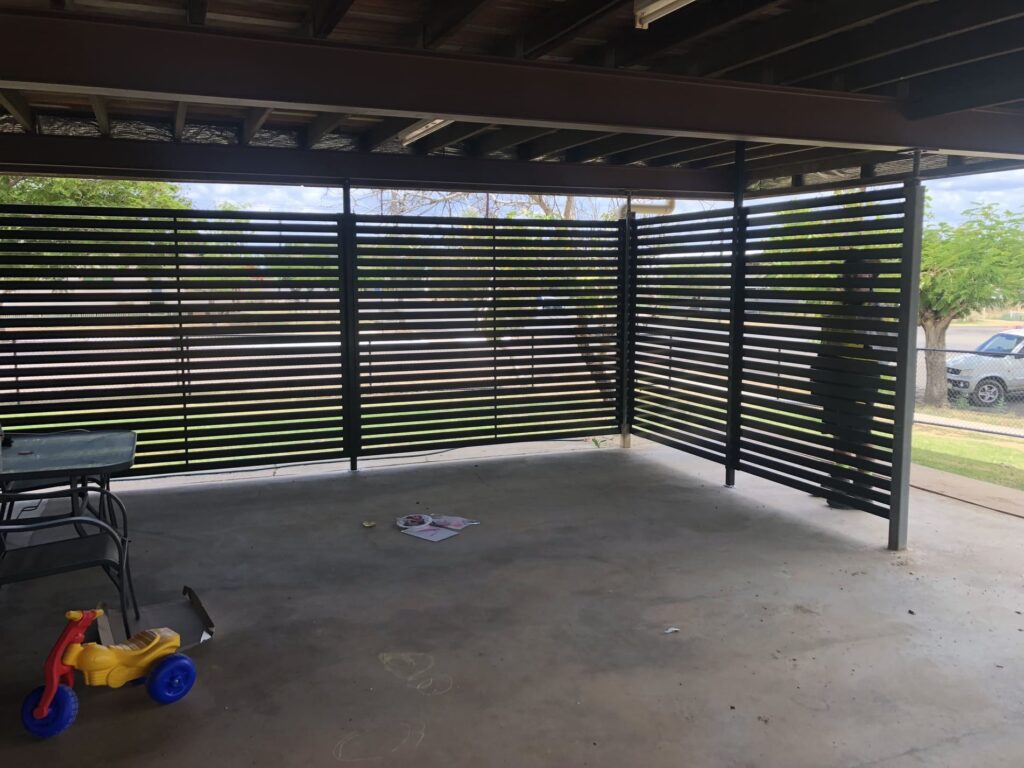
The same applies to outdoor living areas since shutters can add privacy and shade around patios, balconies and entertaining spaces, creating a more comfortable transition between inside and outside. During the wet season, louvres set partly closed in front of an open window let a breeze through while keeping the sun out. The appearance suits a wide range of styles, from contemporary to traditional, and because the louvres adjust, you have far more control than you would with a fixed screen or permanent shade structure. Open them for an unobstructed view, adjust them for filtered light, or close them for protection and privacy.
So, are exterior plantation shutters worth considering?
Exterior plantation shutters make sense when you want several practical benefits from one installation. And the main reasons they are a good choice are:
- Shade reaches the glass before the heat does, which keeps sun-exposed rooms more comfortable
- Adjustable louvres let you manage glare, light and airflow through the day
- Privacy is possible without losing daylight or ventilation
- Aluminium and a quality powder-coat finish suit humid, salt-laden conditions
- Windows and doors gain extra protection from wind-blown dust and small debris
- Rooms, patios and balconies become usable for more of the day
They also come with trade-offs. Closed louvres reduce your view, and custom-made exterior shutters generally involve a larger upfront investment than interior coverings, so they are best placed where the benefit is greatest.
That is why the choice is best made opening by opening. Consider where the sun hits, how much ventilation you want, what your privacy needs are and how the shutters will sit with the rest of the property. If you are thinking about exterior plantation shutters for your home, we can assess your windows and recommend a solution suited to each one, so contact us to arrange a consultation.